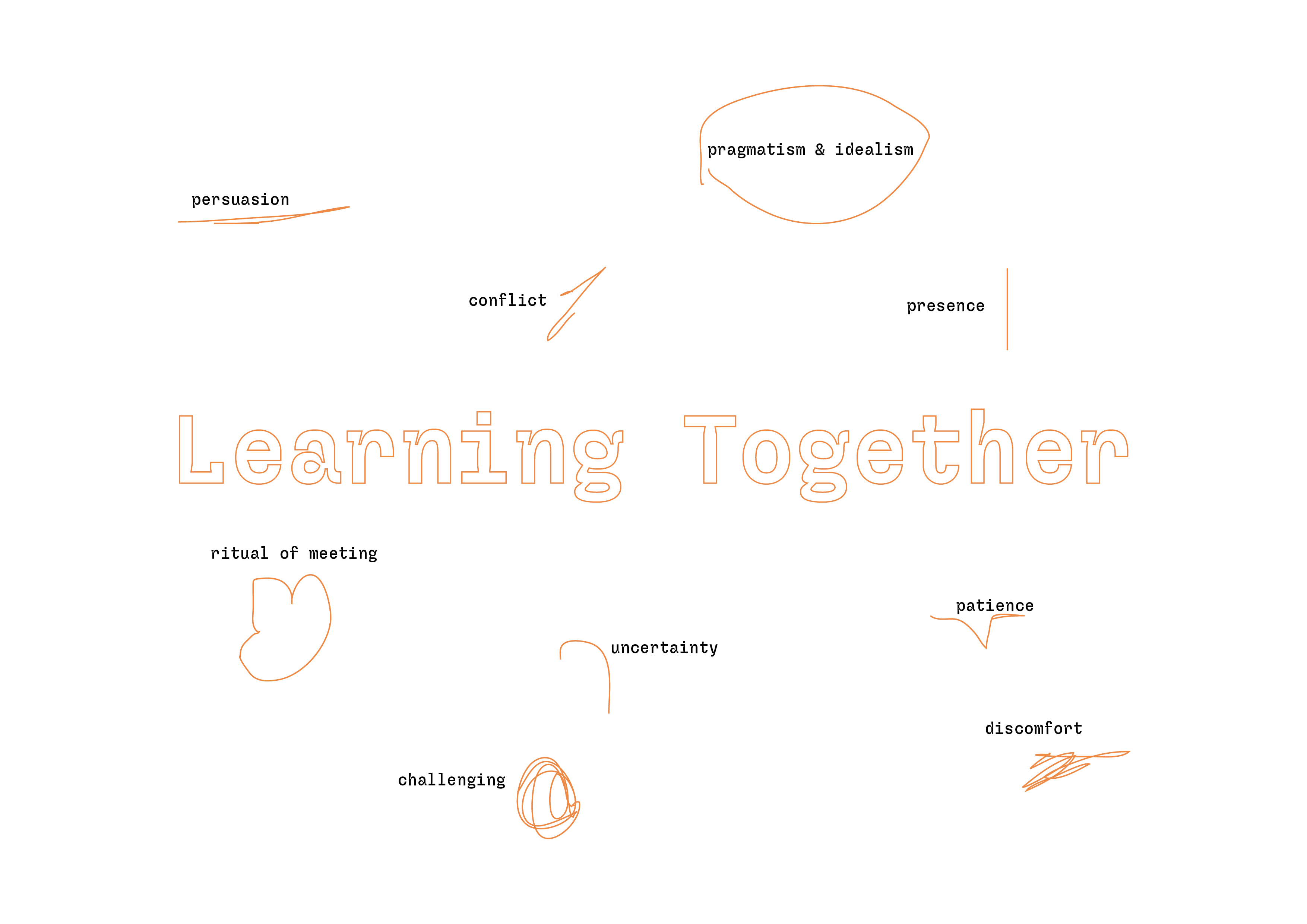
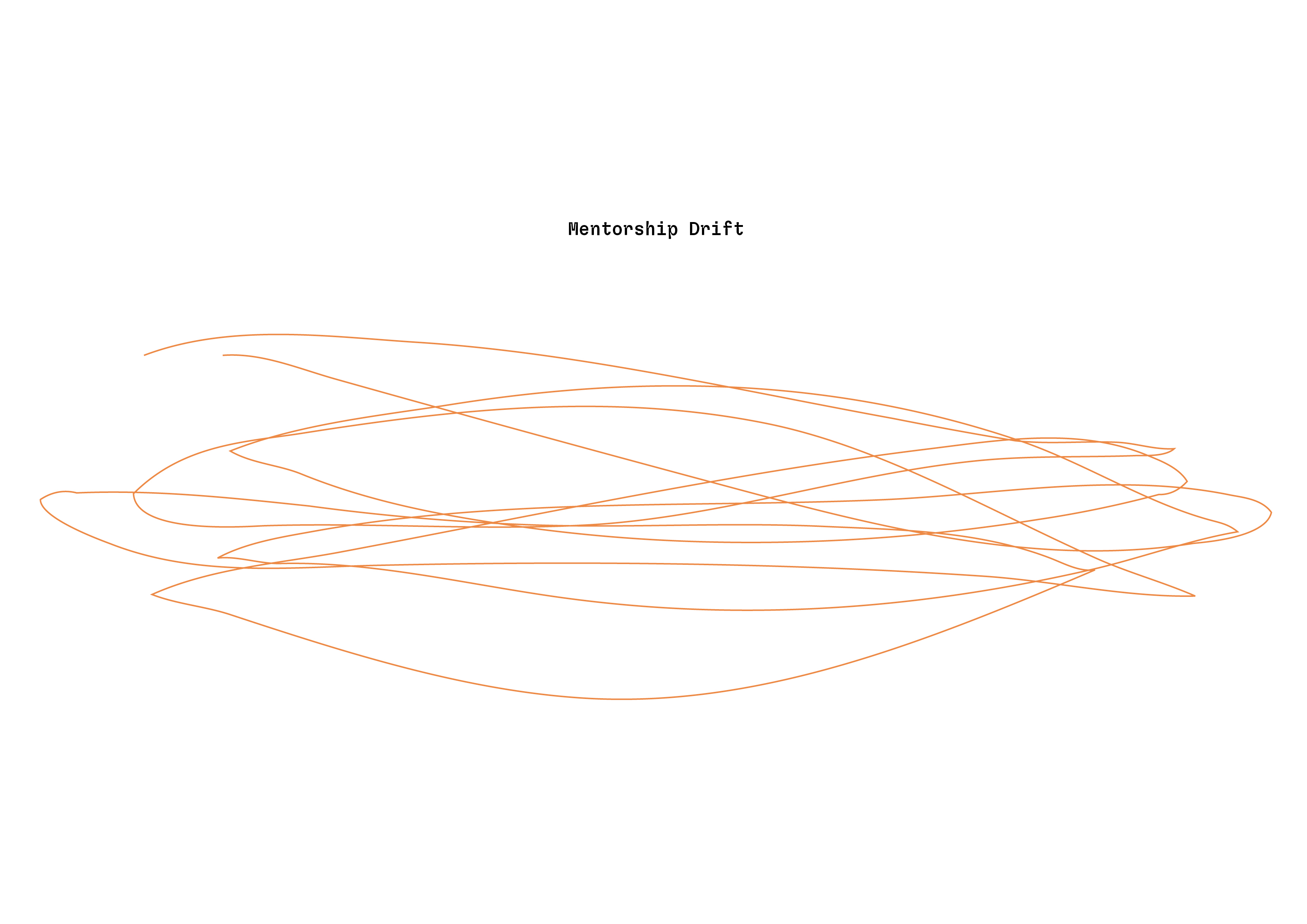
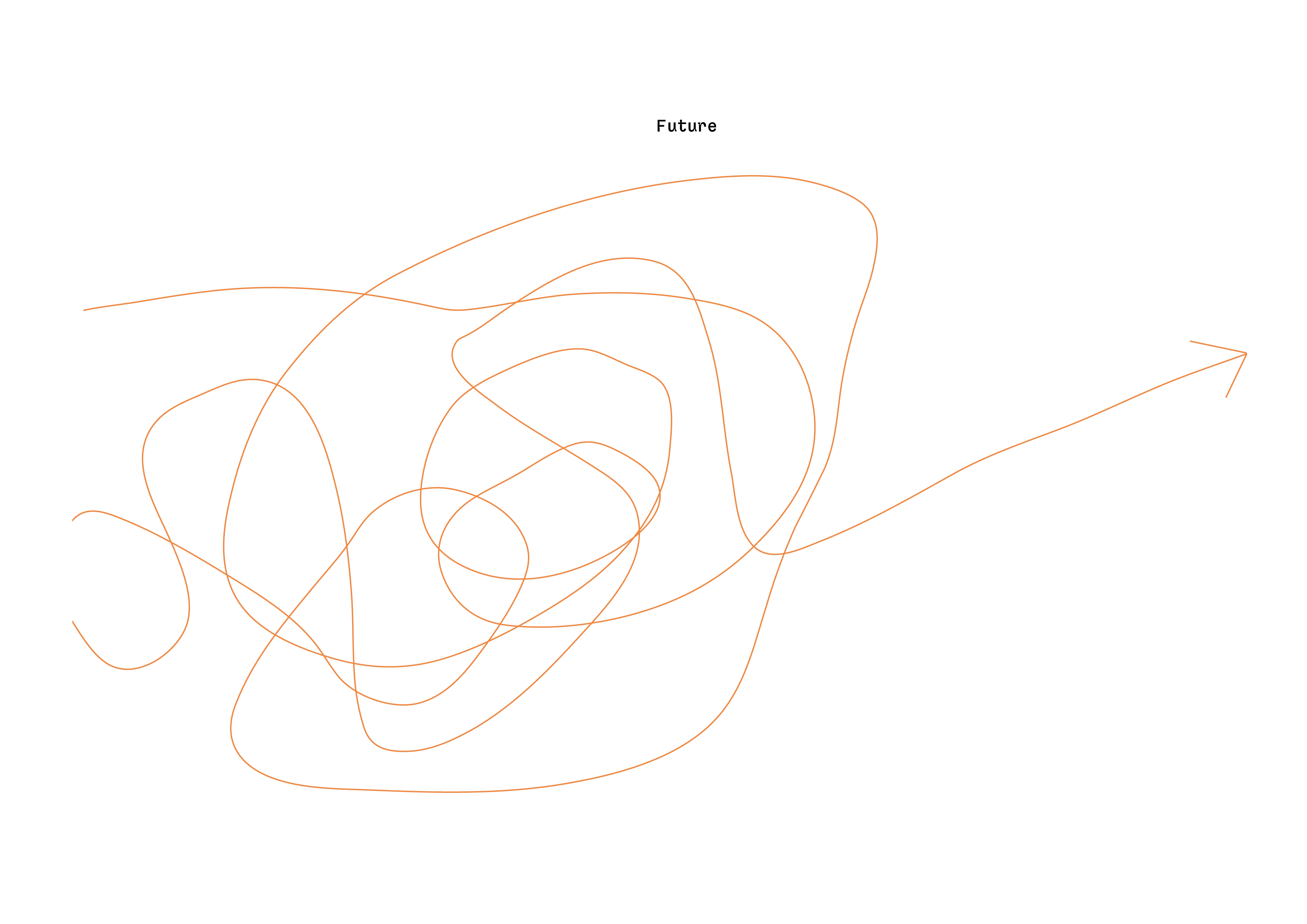
various Common Ground Studio (CGS) diagrams
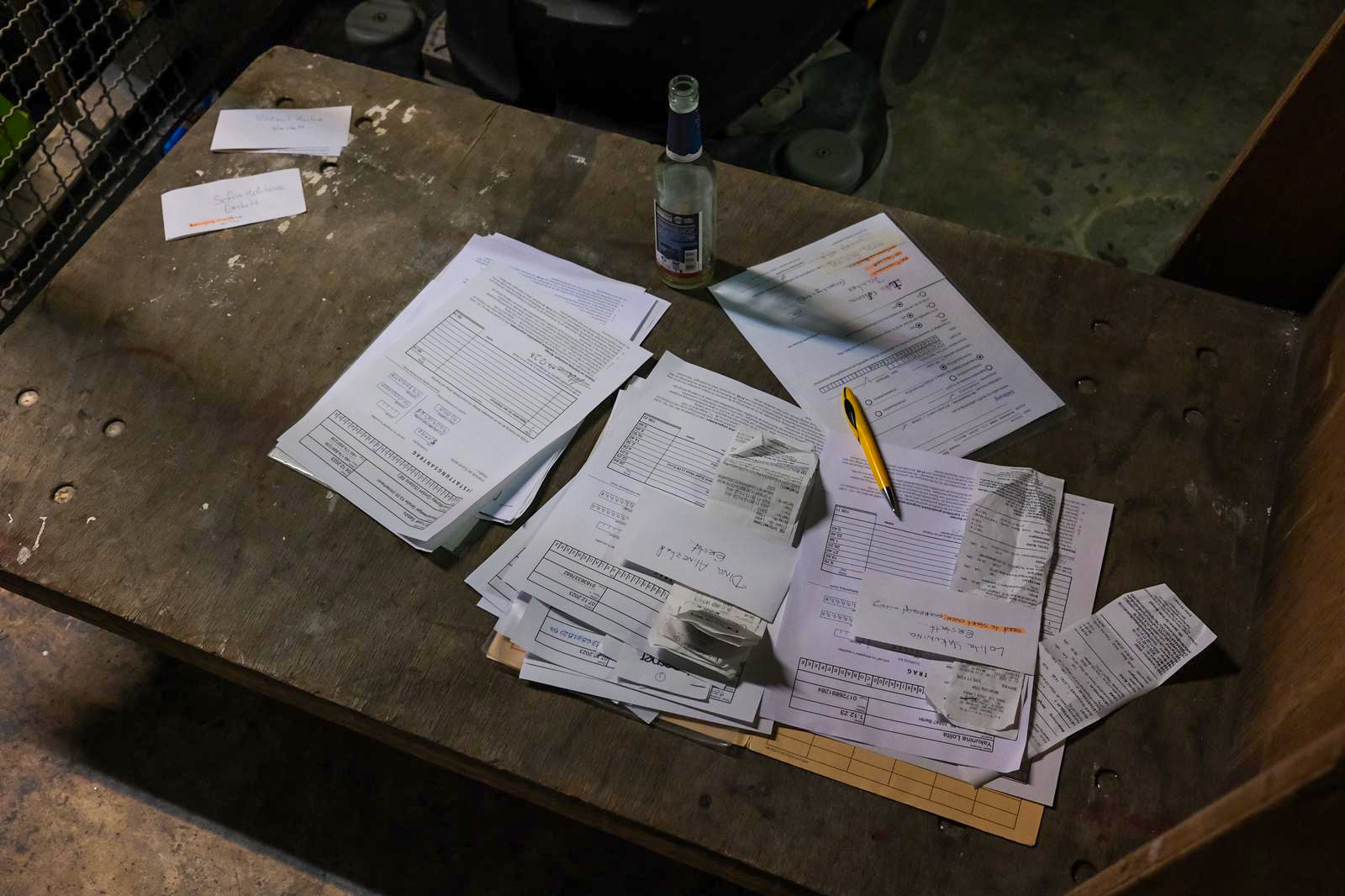
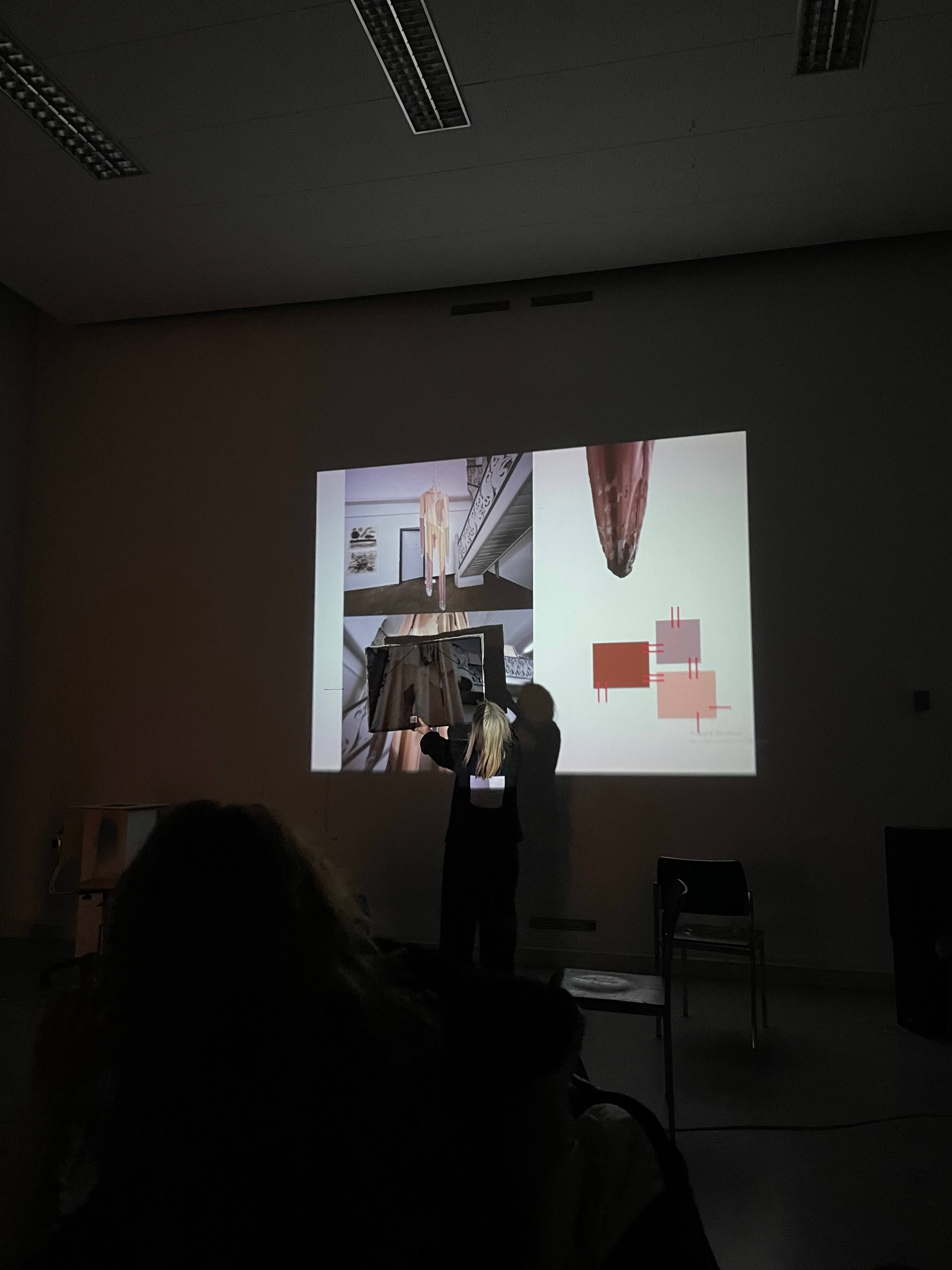
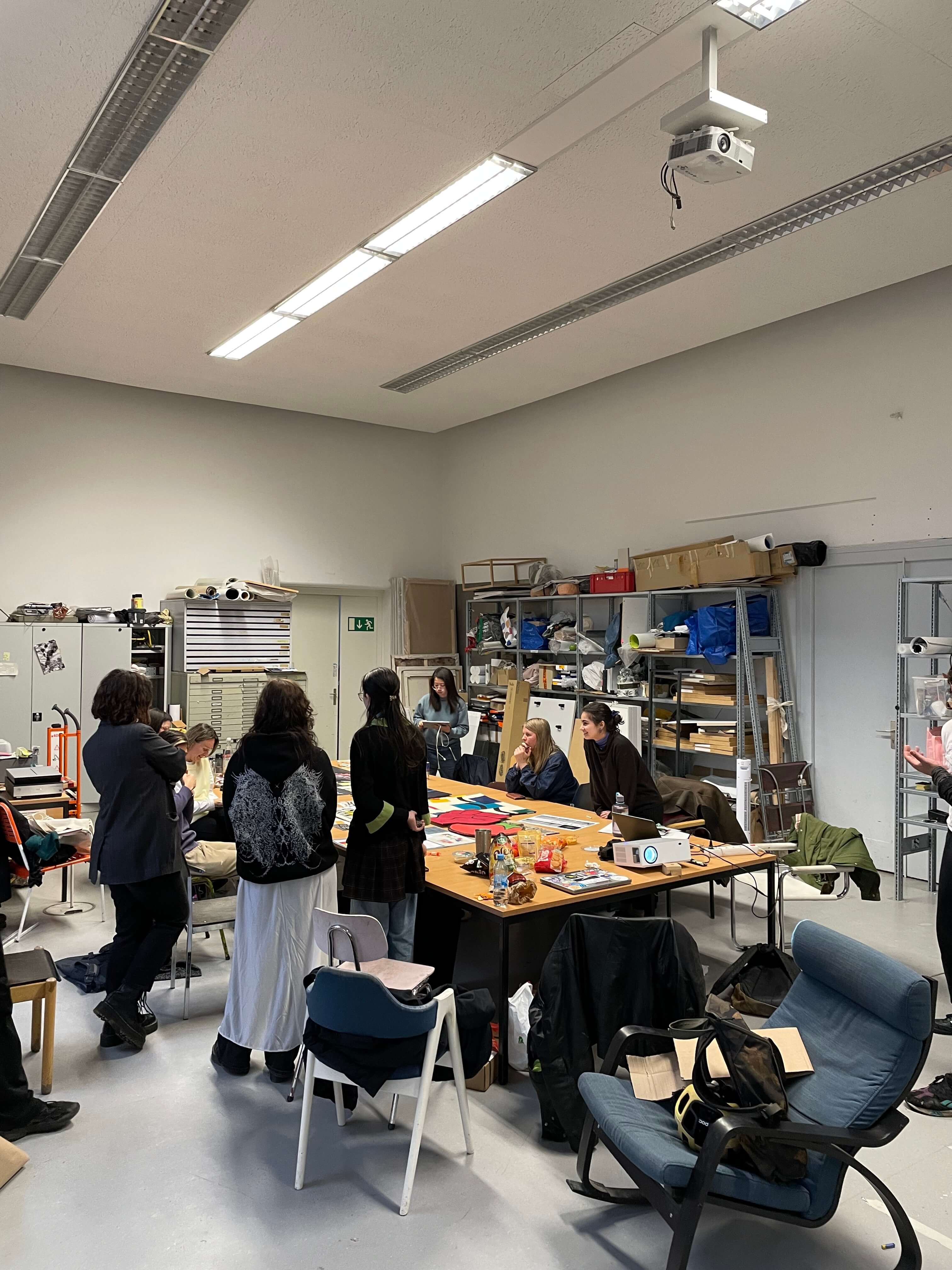
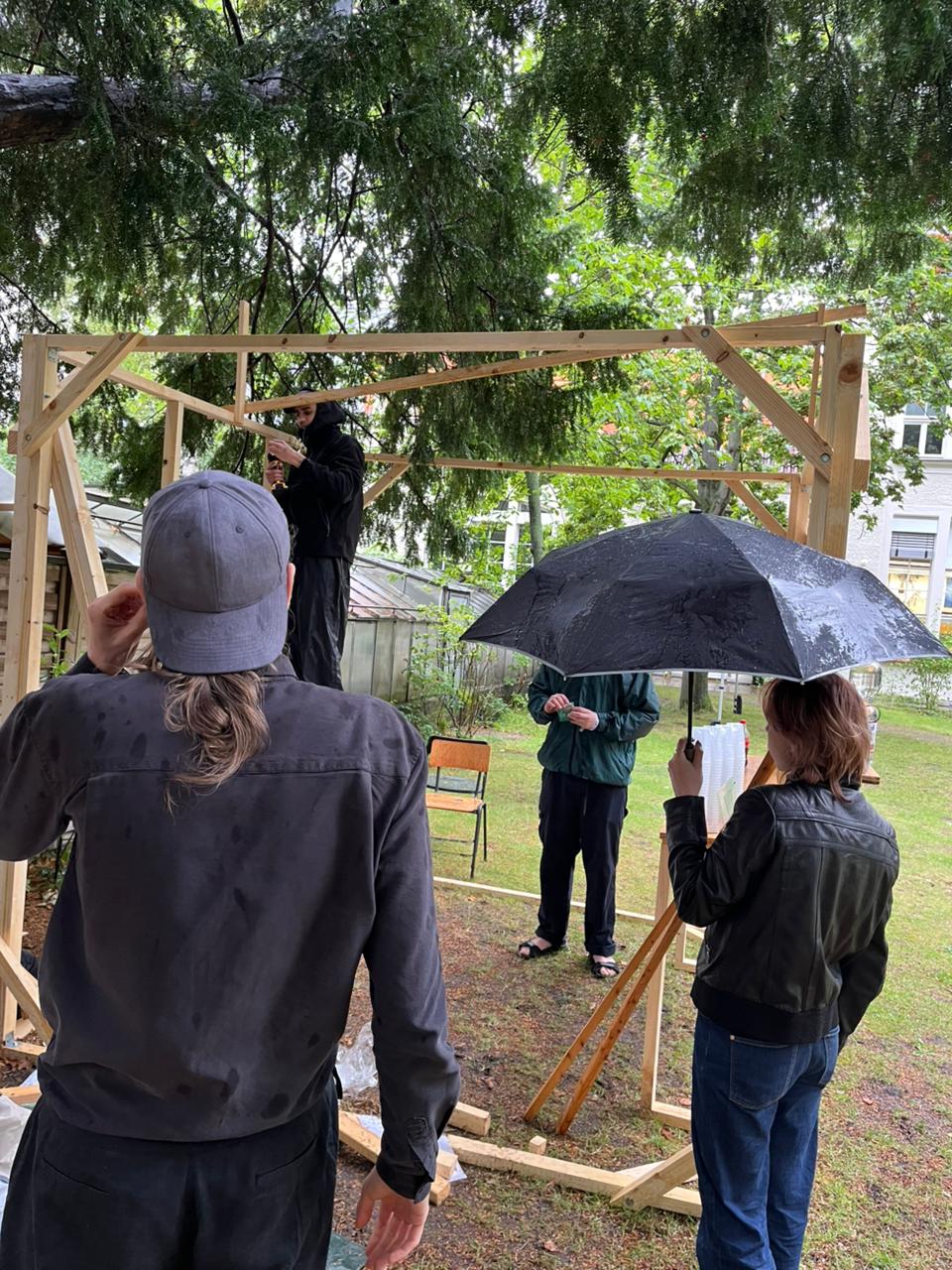
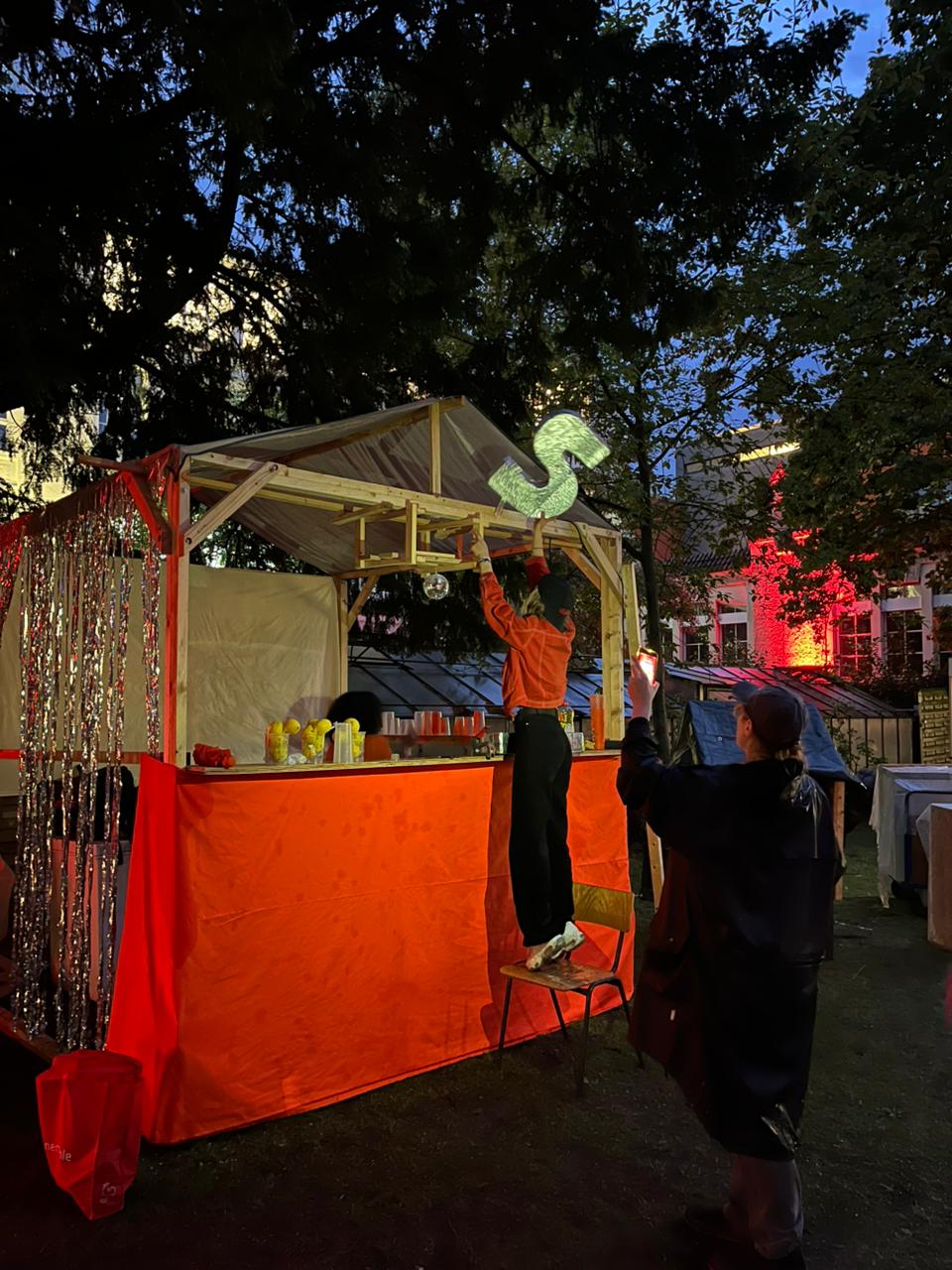
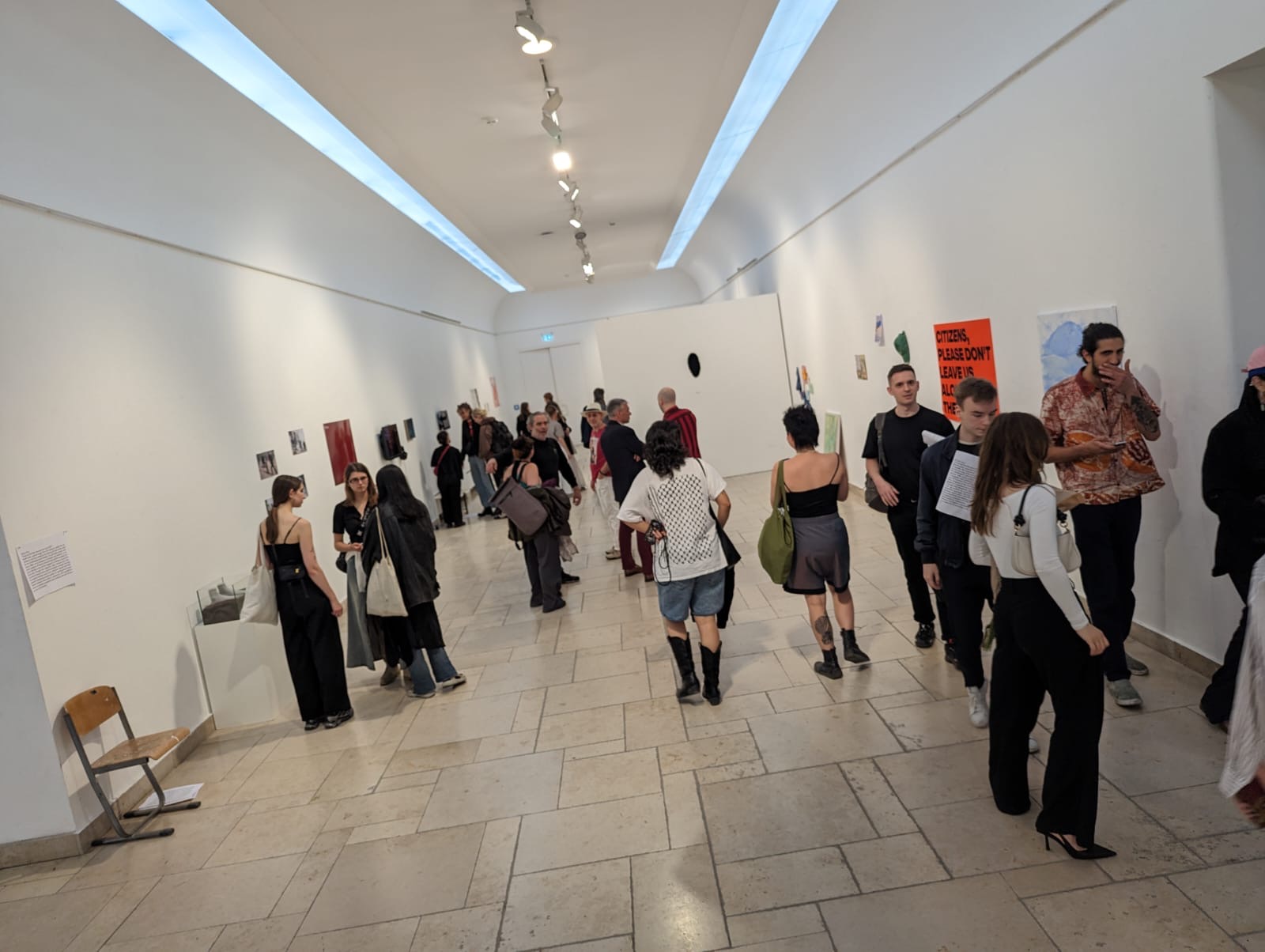
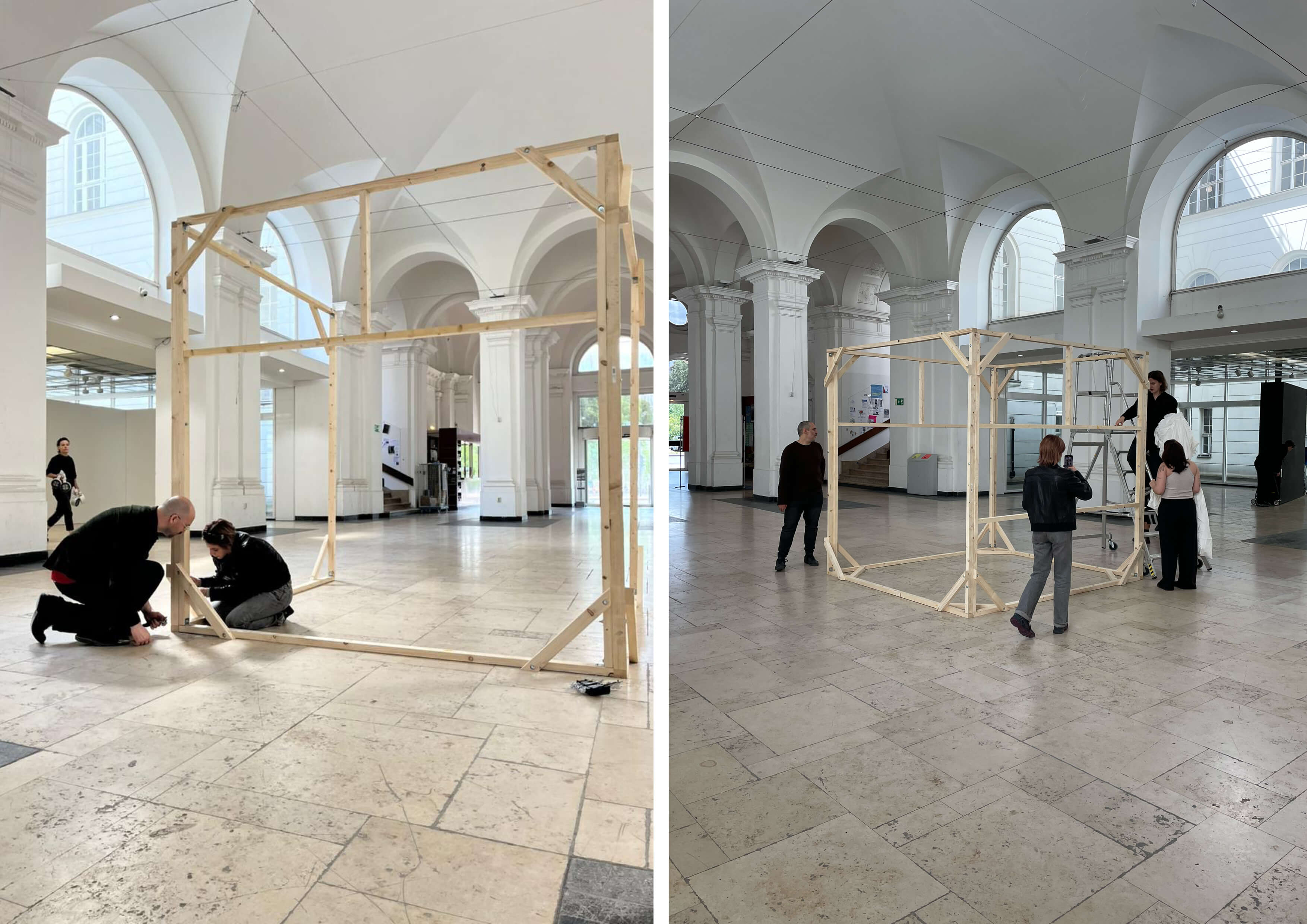
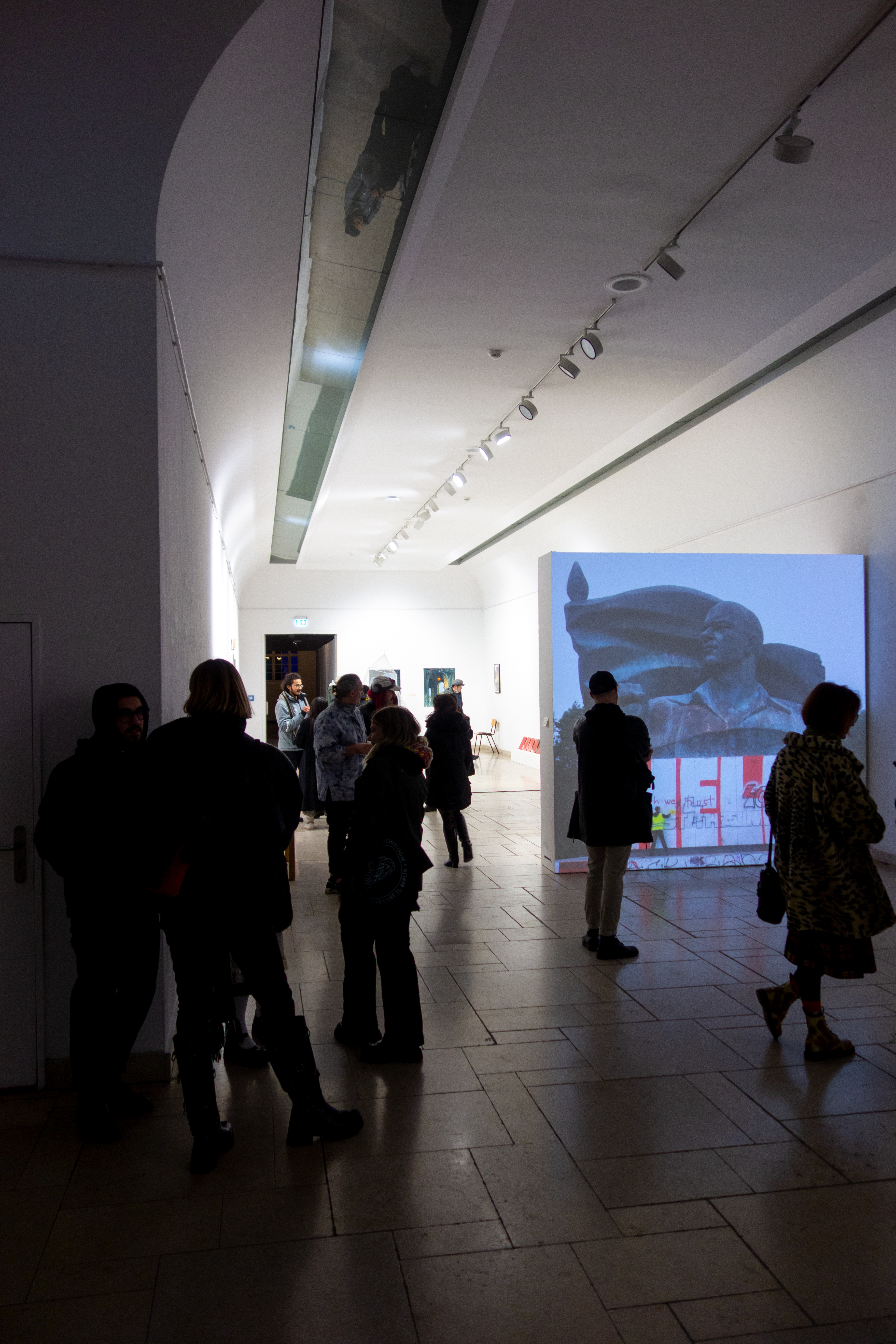
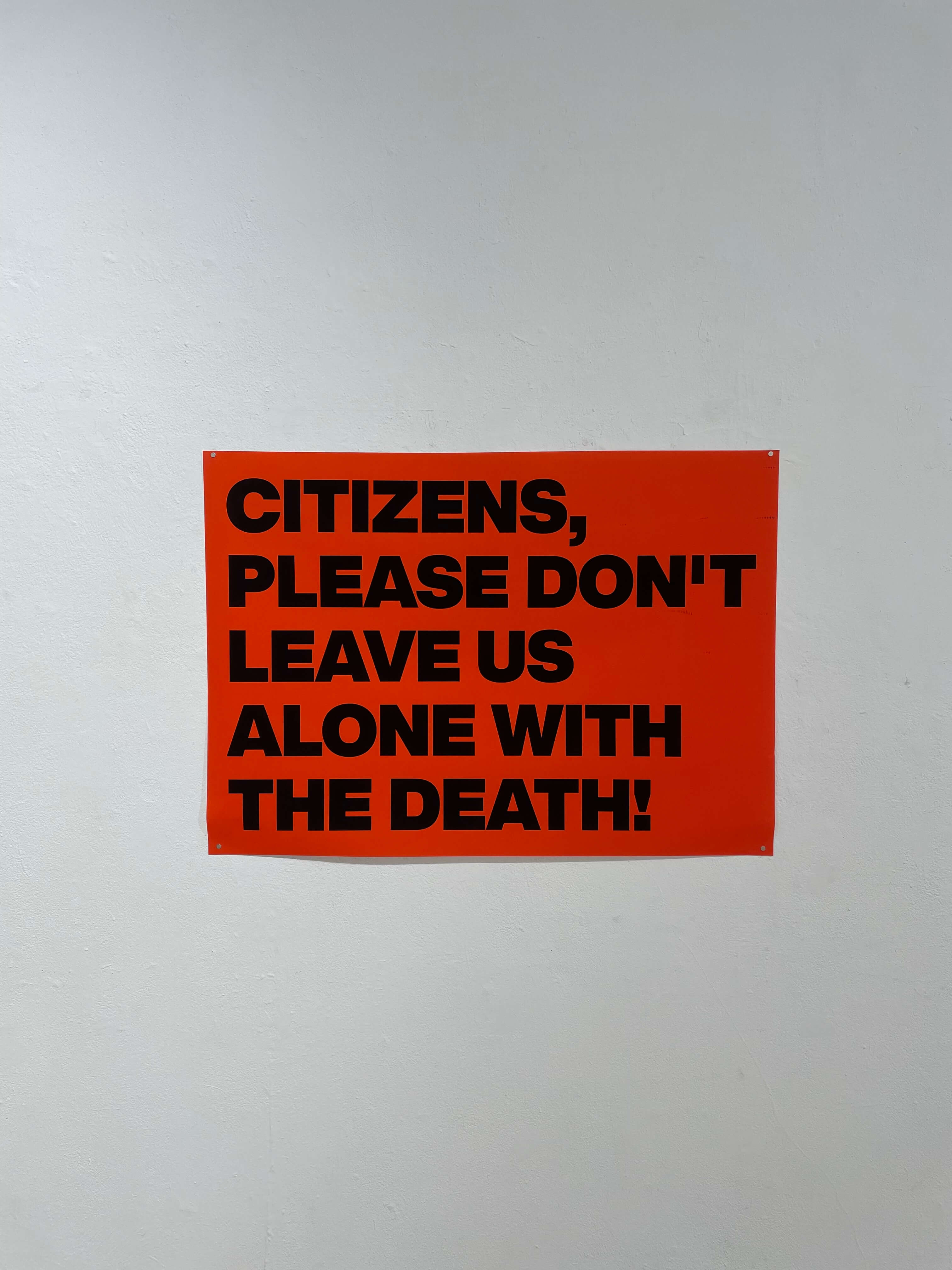
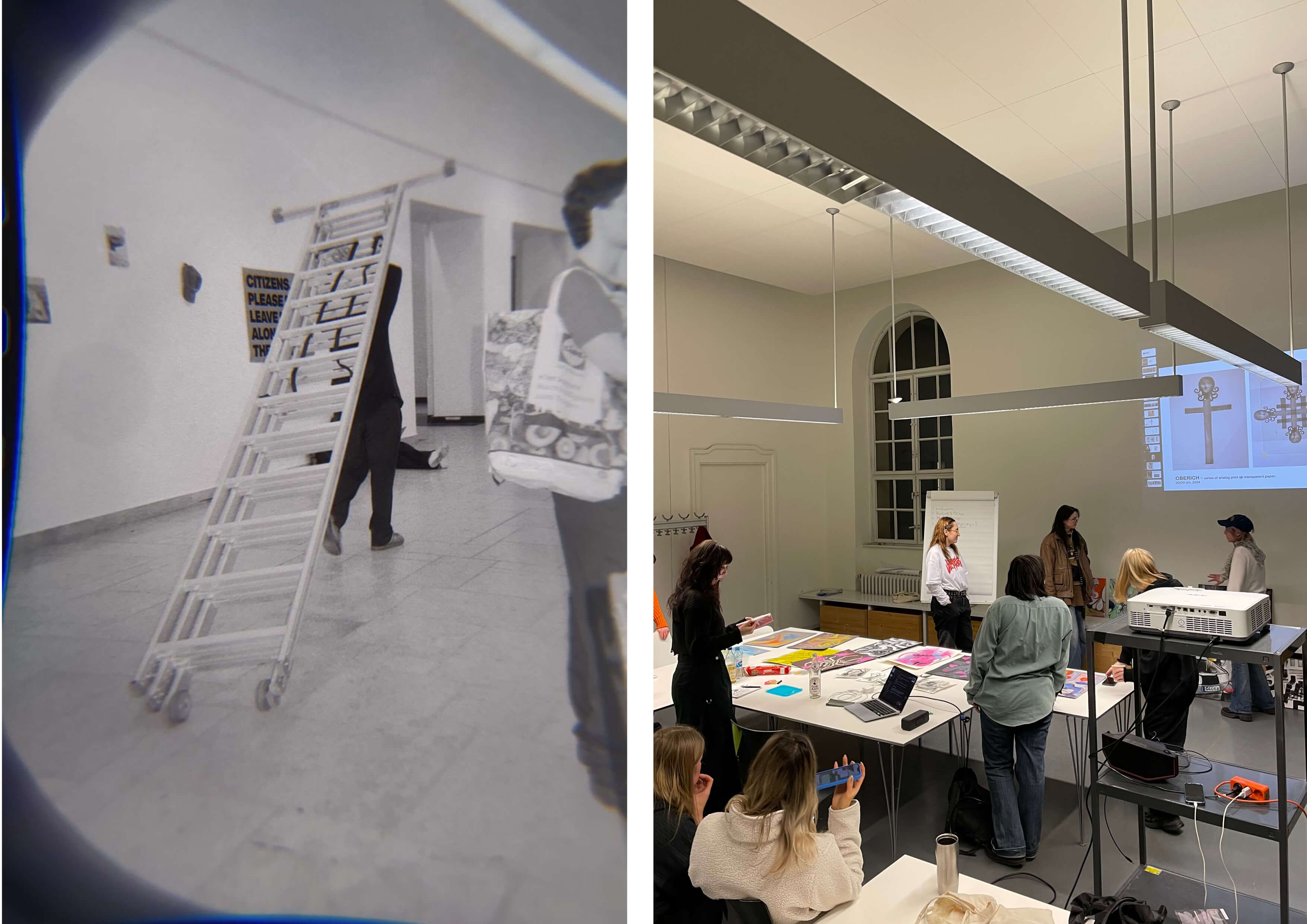
Right: Installation view of Citizens, please don't leave us alone with the death!, for the exhibition 'Elusive Now' in collaboration with students of the ENSBA Beaux-Arts de Paris and members of the Herodotus Program, image courtesy of the artist Anna Ivchenko
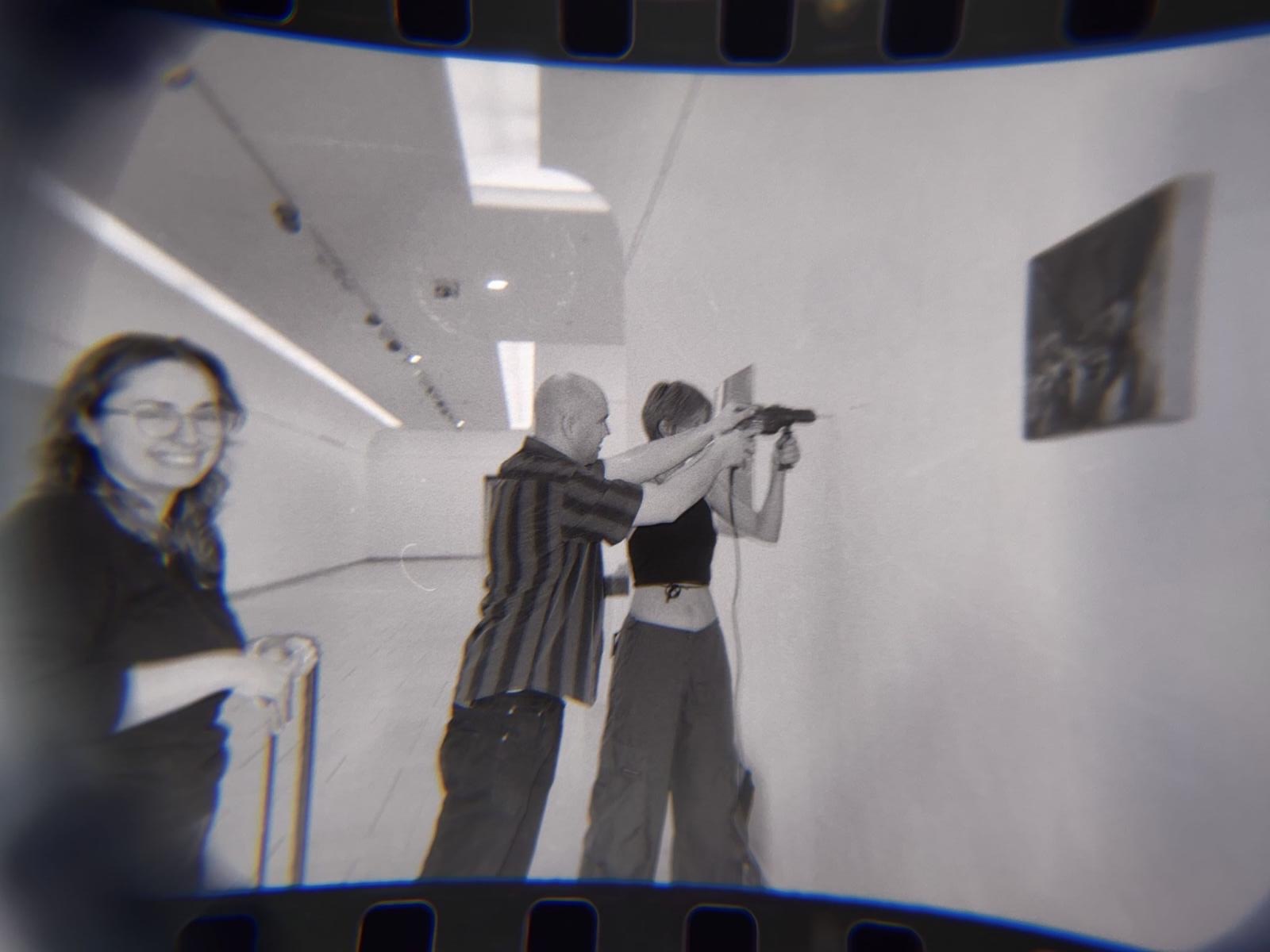
The Model
The Common Ground Studio (CGS) is a infrastructural intervention supporting Artists at Risk in Germany. Due to the structural realities Berlin University of the Arts (UdK), the CGS appropriates the condition of the Fachklasse system, whereby students are grouped with a professional artist in a studio for the duration of their studies. CGS reimagines this model, it is student-led, with past participants mentoring and aiding new ones, creating a cyclical system of support and knowledge-sharing.
In its original format (2020–2025), the CGS developed partnerships with multiple professors and their studios within the Institute of Fine Arts. Participants were embedded into a Fachklasse for an academic year—from October to mid-July. During this time, participants engaged in both formal and informal practices: developing their art, interacting with students and faculty, and learning to navigate the cultural norms, institutional habitus, and bureaucratic structures that shape the academy.
Evolutions
Since its founding, the CGS has undergone three distinct yet continuous evolutions, each shaped by internal learning processes and external structural conditions. The initial phase emerged during the COVID-19 pandemic and focused primarily on mentoring. This concentration was both pragmatic and formative: pandemic restrictions limited access to studios and collective work, while I simultaneously had to develop the pedagogical and organizational competencies required to inhabit a leadership role.
In the post-pandemic phase, the CGS expanded into a more materially present format. Workshops, exhibitions, and collaborative studio practices became central, while partnerships with multiple Fachklassen remained integral to the model.
The third evolution began in the fall of 2025. In response to structural shifts, budget reductions, and the decreasing capacity of Fachklassen to host additional members due to space constraints and their own negotiations of institutional austerity, the CGS transitioned into a nomadic structure. While still operating within the university's seminar spaces, participants no longer depend on permanent studio embedding. This shift has required greater self-organization from members but has simultaneously freed the CGS from spatial limitations, enabling it to support a significantly larger and more diverse cohort.
The nomadic transition has been made possible by the accumulated experience of the past five years. Former participants, many of whom have since entered degree programs or established independent practices, remain actively involved in the CGS as mentors, collaborators, and interlocutors. The knowledge generated across earlier cohorts (practical, institutional, and relational) has not dissipated but has instead been consolidated into a shared resource. By drawing on this collectively built expertise, the CGS leverages its own history as an infrastructural asset, transforming accumulated experience into a renewable mentoring ecology that sustains and guides each new generation of participants.
Situated Practice
Throughout its structural evolutions, the CGS has moved fluidly through the organizational infrastructures of the UdK. Rather than being anchored to a single studio, it operates across seminar spaces, temporary collaborations, and informal institutional networks, forming partnerships where structurally possible. This fluidity allows the CGS to respond pragmatically to institutional constraints while maintaining continuity of support.
My role within the CGS oscillates between leader, mentor, curator, organizer, and community builder, driving a structure that operates within and alongside the UdK to challenge institutional norms, expose their exclusions, and repurpose their infrastructure to create new forms of access and inclusion.
A key aim of the CGS is to create exhibition formats and workshops that encourage collaboration among participants from different cohorts. These spaces foster not just creative outputs but also the relational labor that is critical to art practice and institutional critique. The emphasis on presence and interpersonal relationships acknowledges that many institutional norms are reproduced informally — and can also be transformed through sustained, collective engagement.
The CGS addresses the institutional and temporal barriers of the UdK, particularly those that marginalize individuals with non-Eurocentric educational paths. By exposing participants to the hidden curriculum (the implicit knowledge, values, and expectations of the academy) the CGS makes visible the informal mechanisms through which access and exclusion are reproduced.
Infrastructural Implications
This intervention raises critical questions: How can the fissures of bureaucracy be transformed into opportunities for repurposing and resistance? How can pragmatic strategies reshape institutional structures from within? How can pluralism be actively fostered in systems historically shaped by exclusion? And how might the privileges embedded in art academies be redistributed to widen access?
Fachklassen partnered with the CGS (2020–2025):
Klasse ter Heijne
Klasse Schutter
Klasse Steyerl
Klasse Hussain-Naprushkina
Klasse Weber
Klasse Pryde
Klasse Konrad
Klasse Amadyar
Klasse Fischer
Klasse Robert
Klasse Neugebauer
Klasse Streuli